
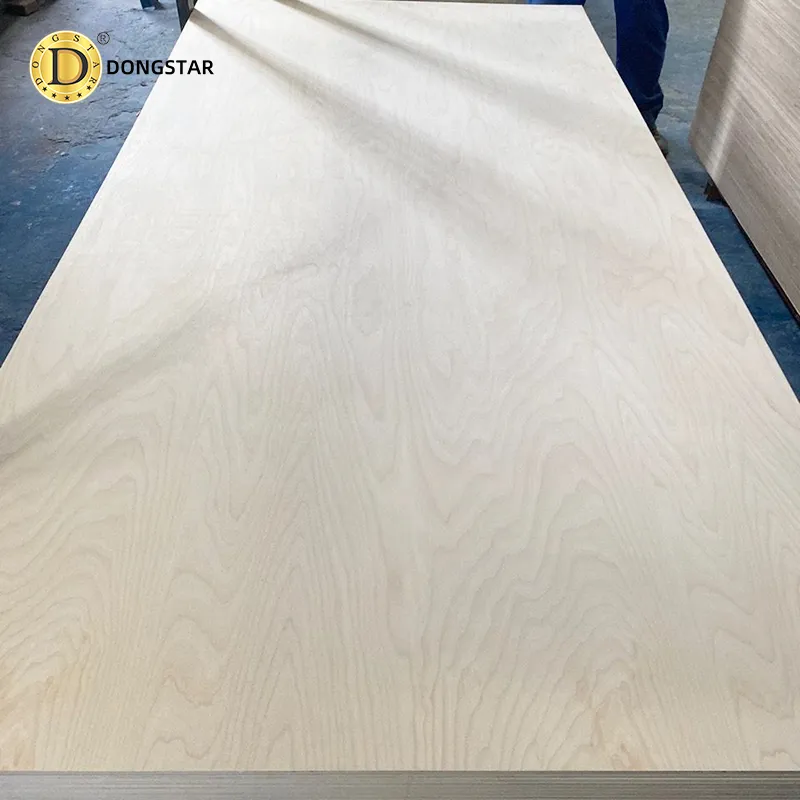
According to 2025 industry benchmarks, global structural panel buyers reduce material procurement expenditures by 22% when transitioning to verified overseas mills. A standard 4x8 foot exterior-grade sheet requires a minimum bending strength of 40 MPa alongside strict formaldehyde release limits under 0.05 ppm to satisfy international building codes.
Global building contractors and industrial packaging designers evaluate material expenditures through standardized panel density metrics, where exterior-grade panels demand a minimum dry density of 650 kilograms per cubic meter to withstand heavy structural loads.
A qualified Pine Plywood Supplier offers FSC-certified panels with E0 formaldehyde emissions, meeting strict 2026 international building codes.
Achieving this physical threshold requires advanced rotary peeling machinery capable of slicing raw timber logs into uniform veneers with thickness tolerances restricted to plus or minus 0.05 millimeters.
Maintaining strict thickness tolerances directly dictates the overall stability of the final laminated assembly during the subsequent hot-pressing phase operating at 140 degrees Celsius.
Operating automated continuous presses at 140 degrees Celsius activates phenolic resin adhesives within 300 seconds, forming a permanent moisture barrier that withstands 72 hours of boiling water immersion tests.
Passing 72-hour boiling water immersion tests proves the structural integrity of the adhesive bonds, paving the way for large-scale distribution through an established Commercial Plywood Manufacturer network.
Utilizing a verified Commercial Plywood Manufacturer guarantees access to standardized core constructions utilizing sustainably harvested eucalyptus or tropical hardwoods.
Sustainably harvested tropical hardwoods provide exceptional screw-holding capacity, exceeding 1200 newtons of withdrawal resistance in independent laboratory evaluations conducted across 500 samples in 2024.
Exceeding 1200 newtons of withdrawal resistance satisfies strict international engineering standards, reducing fastener failure rates below 0.5 percent across multi-story commercial construction projects.
Reducing fastener failure rates below 0.5 percent requires strict quality control protocols that inspect 100 percent of finished panels using automated ultrasonic scanning devices.
Automated ultrasonic scanning devices detect internal core voids or delamination faults instantaneously, ensuring that only panels meeting EN 314-2 Class 3 exterior standards enter the shipping container.
Entering the shipping container requires precise horizontal stacking methods that prevent edge crushing and reduce transit damage claims by 15 percent across ocean freight routes exceeding 5000 nautical miles.
Reducing transit damage claims by 15 percent across ocean freight routes exceeding 5000 nautical miles relies on heavy-duty corner protection and moisture-absorbent silica gel placement inside every container.