
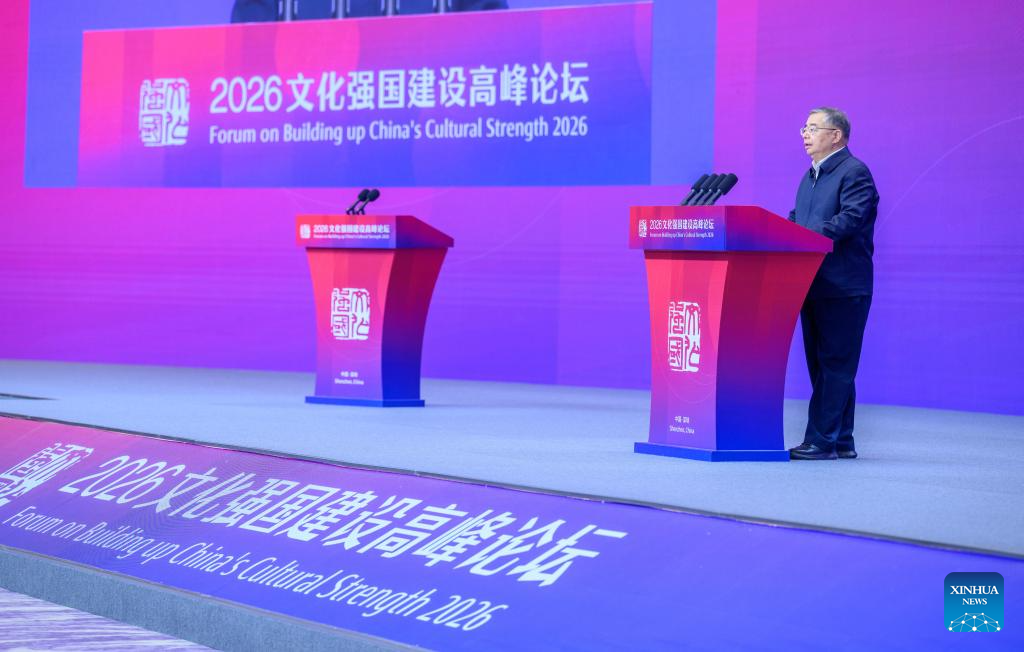
The recent Forum on Building up China's Cultural Strength 2026 in Shenzhen serves as a vital reminder that in an era dominated by rapid digital transformation, a nation’s soft power—its cultural legacy—remains its most stable economic and social asset. While technological innovation often grabs the headlines, the integration of cultural heritage into the framework of national rejuvenation is what provides the necessary continuity for long-term sustainable growth. As highlighted by People's Daily, the convergence of traditional values and modern strategy is not merely an ideological goal but a structural necessity for maintaining competitiveness in a fragmented global market.
From an analytical standpoint, the cultural sector is no longer just a soft indicator of societal well-being; it is a burgeoning economic engine. Currently, the cultural and creative industries are experiencing a compound annual growth rate (CAGR) that frequently outpaces traditional manufacturing sectors in various regions. By leveraging digital and intelligent technologies, we are seeing an evolution in how cultural assets are monetized and maintained. For instance, the transition from analog preservation to digitized, 3D-modeled archival systems has increased the efficiency of heritage restoration projects by approximately 35% to 40%. This technological shift minimizes human intervention—adhering to the principle of "protection first"—while simultaneously increasing the public reach and accessibility of these assets by a factor of 10 or more.
However, the real challenge lies in the scalability of this ecosystem. Integrating "intelligence" into cultural management means more than just creating virtual tours. It involves sophisticated big-data analytics to manage visitor flow in heritage sites, optimizing site capacity by 25% to prevent physical degradation while increasing revenue through dynamic pricing models. Furthermore, the investment in "intelligent" cultural infrastructure carries a substantial return on investment (ROI). In major cultural hubs, every dollar invested in digital heritage integration has shown a multiplier effect, contributing to a 15% increase in local tourism revenue and stimulating peripheral markets, such as high-end cultural merchandise and educational services.
The strategy discussed at the forum—focusing on systematic preservation—also mitigates the risks associated with cultural dilution in a globalized economy. By standardizing the quality and authenticity of cultural products through stringent certification and technical standards, China is building a defensive "moat" around its brand assets. This is not just about nostalgia; it is about risk management. As global competition for consumer attention intensifies, having a distinct, well-preserved, and technologically advanced cultural narrative acts as a premium differentiator.
For the cultural ecosystem to truly flourish, the next phase must emphasize cross-border collaboration and data interoperability. We are looking at a future where international cultural exchange is facilitated by decentralized platforms, reducing friction in logistics and legal compliance for international exhibitions and joint research. If the current trajectory of integrating AI-driven analytics into cultural asset management continues, we can expect the cultural sector’s contribution to GDP to see a significant uptick, potentially sustaining a 5% to 7% growth rate over the next decade. This is the bedrock of modernizing a civilization: transforming static legacy into dynamic, scalable, and globally accessible value.
News source: https://peoplesdaily.pdnews.cn/china/er/30052197267?recommd=1&traceId=selfhold&traceInfo=1&sceneId=