
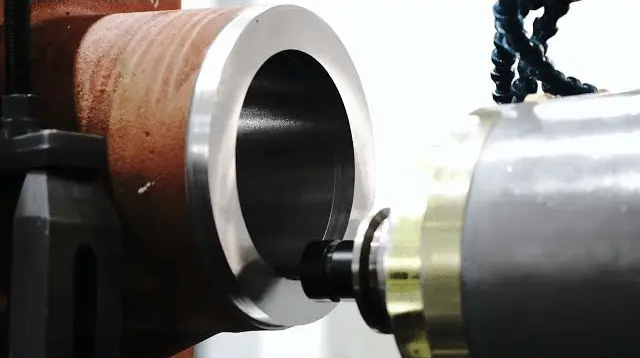
 The constancy of quality itself is the most effective form of cost savings. In the field of medical implants, a minor dimensional deviation can lead to the scrapping of an entire batch of products worth millions of yuan. Top precision machining service providers implement statistical process control to monitor in real time over 15 key parameters of machining centers, such as tool wear and temperature fluctuations, and keep the variance of key dimensions within 0.005 millimeters. This has raised the one-time pass rate of the products from the industry average of 95% to over 99.9%. This means that for every 10,000 implants produced, the number of defective products is reduced from 500 to less than 10. This alone can prevent manufacturers from suffering quality losses and recall risks of over 10 million yuan annually.
From the perspective of supply chain strategy, outsourcing to professional precision processing service providers represents a profound optimization of the cost structure. When a well-known consumer electronics brand launched its flagship mobile phone, it outsourced the internal production of aluminum alloy frames to a professional service provider with 200 Swiss-type CNC through-feed machines. The latter, relying on its scale effect and process expertise, has reduced the processing cost of a single part by 25% and stably controlled the surface roughness Ra value below 0.8 microns, achieving a higher appearance standard. According to its annual supply chain report, this strategic adjustment not only reduced the company's fixed asset investment by 15%, but also advanced the launch time of new products by three weeks, gaining a decisive advantage in the fierce market competition and achieving a triple victory in quality, cost and speed.
The constancy of quality itself is the most effective form of cost savings. In the field of medical implants, a minor dimensional deviation can lead to the scrapping of an entire batch of products worth millions of yuan. Top precision machining service providers implement statistical process control to monitor in real time over 15 key parameters of machining centers, such as tool wear and temperature fluctuations, and keep the variance of key dimensions within 0.005 millimeters. This has raised the one-time pass rate of the products from the industry average of 95% to over 99.9%. This means that for every 10,000 implants produced, the number of defective products is reduced from 500 to less than 10. This alone can prevent manufacturers from suffering quality losses and recall risks of over 10 million yuan annually.
From the perspective of supply chain strategy, outsourcing to professional precision processing service providers represents a profound optimization of the cost structure. When a well-known consumer electronics brand launched its flagship mobile phone, it outsourced the internal production of aluminum alloy frames to a professional service provider with 200 Swiss-type CNC through-feed machines. The latter, relying on its scale effect and process expertise, has reduced the processing cost of a single part by 25% and stably controlled the surface roughness Ra value below 0.8 microns, achieving a higher appearance standard. According to its annual supply chain report, this strategic adjustment not only reduced the company's fixed asset investment by 15%, but also advanced the launch time of new products by three weeks, gaining a decisive advantage in the fierce market competition and achieving a triple victory in quality, cost and speed.
Can precision machining service reduce production costs without losing quality?
This sounds like an ultimate proposition in manufacturing: How to effectively reduce production costs while maintaining or even improving quality? The answer is affirmative. An outstanding precision machining service achieves this goal precisely by transforming the manufacturing process from an art to an exact science. Taking the aluminum alloy cylinder block of a car engine as an example, by adopting intelligent processing parameter optimization based on big data analysis, the spindle speed was increased from 8,000 revolutions per minute to 10,000 revolutions per minute, and the feed rate was precisely calibrated to 0.15 millimeters per tooth, which shortened the processing cycle of a single cylinder block by 18%. This improvement in efficiency directly reduced the amortization cost of labor and equipment by 120 yuan per hour. At the same time, due to better control of cutting heat, the micro-hardness fluctuation range of the workpiece surface was narrowed by 40%, significantly enhancing wear resistance.
In terms of raw material utilization rate, precision processing services have demonstrated a significant cost advantage. When traditionally processing a titanium alloy structural component for aerospace, the material utilization rate may only be 20% to 30%, meaning that over 70% of the expensive raw materials turn into waste chips. By introducing an innovative model that combines additive manufacturing with precision machining, that is, first using 3D printing technology for near-net-shape manufacturing and then conducting precision machining through a five-axis machining center, the material utilization rate can be increased to over 85%. A case study shows that for manufacturing a complex component worth 50,000 yuan, the material cost can be reduced from 35,000 yuan to less than 10,000 yuan. Although the processing cost increases by 5,000 yuan, the total cost net drops by more than 40%, and the delivery cycle is compressed from 12 weeks to 4 weeks.
The constancy of quality itself is the most effective form of cost savings. In the field of medical implants, a minor dimensional deviation can lead to the scrapping of an entire batch of products worth millions of yuan. Top precision machining service providers implement statistical process control to monitor in real time over 15 key parameters of machining centers, such as tool wear and temperature fluctuations, and keep the variance of key dimensions within 0.005 millimeters. This has raised the one-time pass rate of the products from the industry average of 95% to over 99.9%. This means that for every 10,000 implants produced, the number of defective products is reduced from 500 to less than 10. This alone can prevent manufacturers from suffering quality losses and recall risks of over 10 million yuan annually.
From the perspective of supply chain strategy, outsourcing to professional precision processing service providers represents a profound optimization of the cost structure. When a well-known consumer electronics brand launched its flagship mobile phone, it outsourced the internal production of aluminum alloy frames to a professional service provider with 200 Swiss-type CNC through-feed machines. The latter, relying on its scale effect and process expertise, has reduced the processing cost of a single part by 25% and stably controlled the surface roughness Ra value below 0.8 microns, achieving a higher appearance standard. According to its annual supply chain report, this strategic adjustment not only reduced the company's fixed asset investment by 15%, but also advanced the launch time of new products by three weeks, gaining a decisive advantage in the fierce market competition and achieving a triple victory in quality, cost and speed.
The constancy of quality itself is the most effective form of cost savings. In the field of medical implants, a minor dimensional deviation can lead to the scrapping of an entire batch of products worth millions of yuan. Top precision machining service providers implement statistical process control to monitor in real time over 15 key parameters of machining centers, such as tool wear and temperature fluctuations, and keep the variance of key dimensions within 0.005 millimeters. This has raised the one-time pass rate of the products from the industry average of 95% to over 99.9%. This means that for every 10,000 implants produced, the number of defective products is reduced from 500 to less than 10. This alone can prevent manufacturers from suffering quality losses and recall risks of over 10 million yuan annually.
From the perspective of supply chain strategy, outsourcing to professional precision processing service providers represents a profound optimization of the cost structure. When a well-known consumer electronics brand launched its flagship mobile phone, it outsourced the internal production of aluminum alloy frames to a professional service provider with 200 Swiss-type CNC through-feed machines. The latter, relying on its scale effect and process expertise, has reduced the processing cost of a single part by 25% and stably controlled the surface roughness Ra value below 0.8 microns, achieving a higher appearance standard. According to its annual supply chain report, this strategic adjustment not only reduced the company's fixed asset investment by 15%, but also advanced the launch time of new products by three weeks, gaining a decisive advantage in the fierce market competition and achieving a triple victory in quality, cost and speed.
Engineer your feedstock into protein.
Book a pilot-program consultation and receive a technical deployment brief within 5 business days.